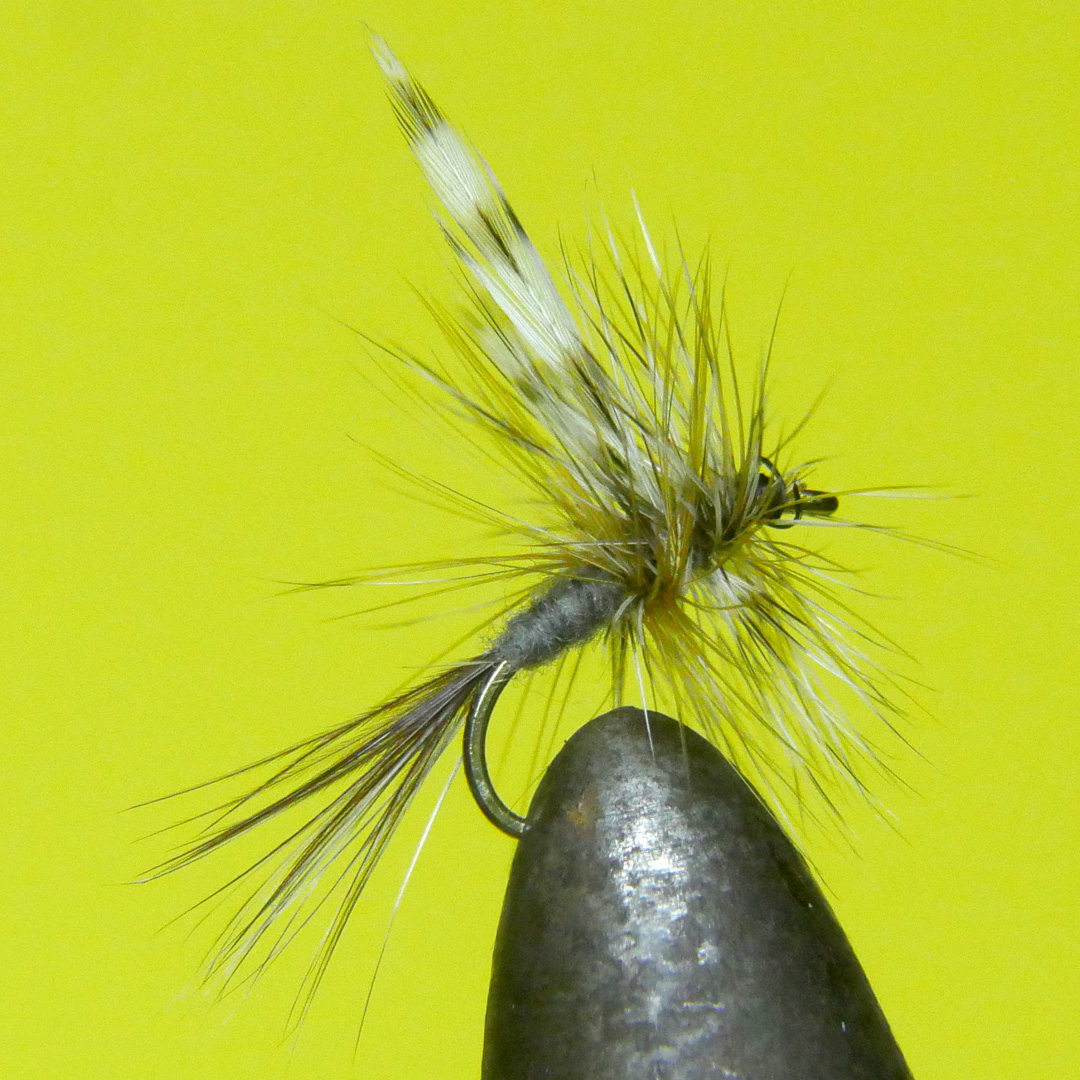
The Adams dry fly is arguably the most famous, successful, and widely used trout fly in the history of fly fishing. Invented in northern Michigan over a century ago, it is the ultimate "general attractor" pattern—meaning it does not copy a single insect perfectly, but looks convincing enough to mimic a massive variety of mayflies, caddisflies, and midges.
The fly was created by Leonard Halladay (1872–1952), an expert fly tyer and commercial guide living in Mayfield, Michigan.
In 1922, Halladay’s close friend and frequent fishing companion, Charles F. Adams, returned from a tough day of fishing on the nearby Boardman River. He explained that the trout were rising aggressively to a specific gray hatch, but none of his traditional English or Catskill-style flies could entice them.
Halladay sat down at his vise, mixed together brown and grizzly feathers, dubbed a gray body, and handed the creation to Adams. The next day, Adams fished the new pattern on the Boardman River and caught a spectacular bounty of trout.